
Financial Stress-Test: Early Retirement Cash Flow in a Pandemic
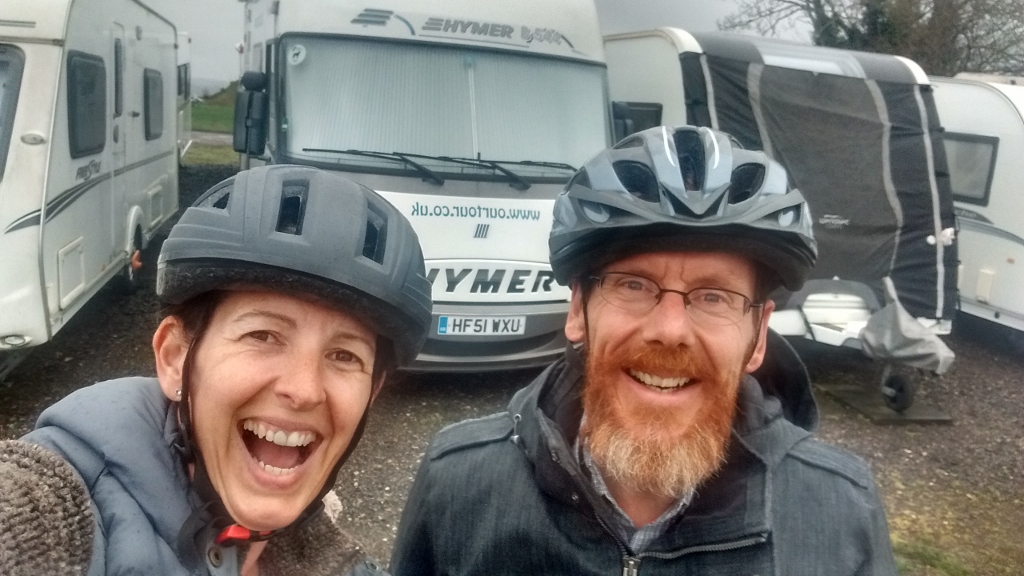
Julie and I left our corporate jobs over four years ago, aged 43. This blog post takes a brief look at how we’re funding such an early retirement. It then looks at how we’ve personally coped, so far, with the money-side shock of the COVID-19 (coronavirus) pandemic.
Disclaimer: we’re a couple of amateur investors with no formal financial training or qualifications. Please treat the info below as such: we’re in no position to advise you on whether/how you should invest.
Some Perspective
First up, I just want to keep what I’m about to write in perspective. Money is important in life, but life itself will always win in a one-on-one fight. Having money in the bank is little consolation if someone close to you is made seriously ill or even dies as a result of this pandemic. As I write, over 38,000 people have passed away from COVID-19 in the UK, and one website forecasts a death toll of around 45,000 by early August (in two month’s time), when deaths in this wave *should* have almost ceased.
Also, we’re writing from a strong initial financial position. We know there are huge numbers of people in the UK and around the world who have lost their jobs, or are negatively impacted financially in other ways by the pandemic, through no fault of their own. We know we’re very fortunate to have got ourselves into the position we are in, and we’re very grateful for what we have.
How We Funded Early Retirement
Below is how we’ve funded our early retirement. You can find more info in our book The Non-Trepreneurs, which describes our approach in detail, or get the bare bones from our earlier eBook called Funding Freedom, which is always free on Smashwords, but Amazon sometimes charge up to 99p for it:
- We have a bungalow and a house, both of which we used to live in, but now rent out.
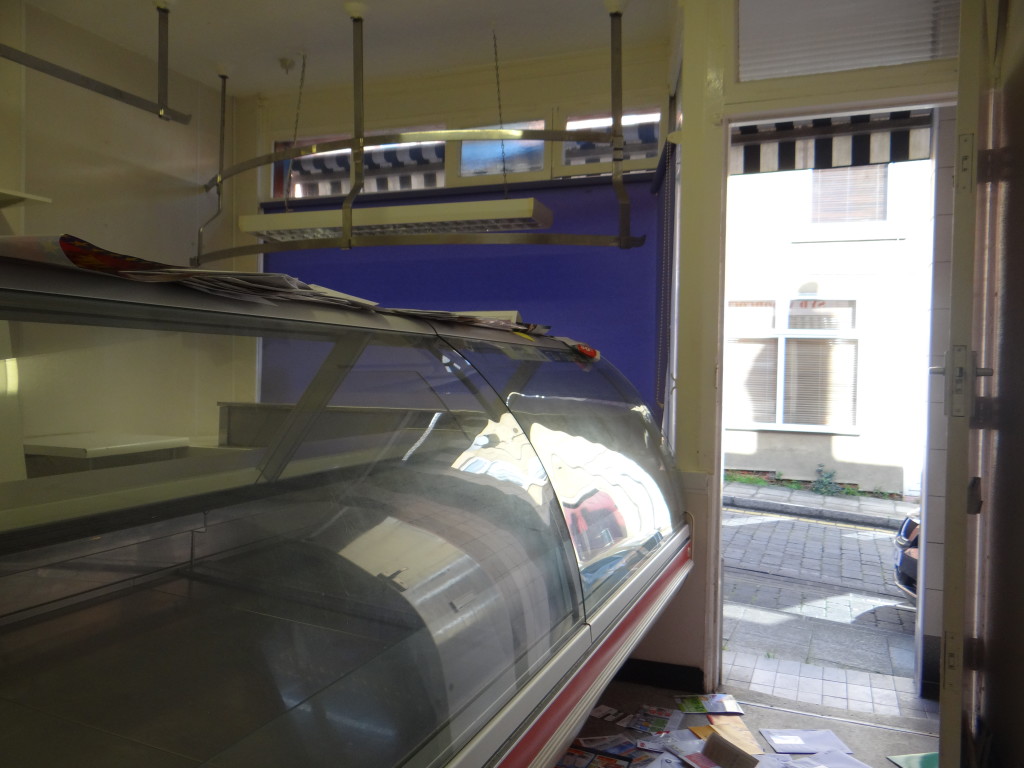
- We have a third house, which used to be a butcher’s shop, which we share with tenants.
- This third property has a small shop embedded in it which is also rented out.
- The bungalow and the butchers have solar panels on the roofs which generate an income.
- We’ve written a series of motorhome books (see them here) and self-published them on Amazon (here’s how). We receive royalty payments for each one sold.
- We have passive income from Utility Warehouse.
- We’ve a portfolio of share funds which generate dividend income.
- We have some money in premium bonds, which ‘win’ interest from time to time.
- This blog generates some income through advertising and affiliate marketing.
- And we occasionally do some paid work!
We also have personal pensions which will bolster our income from age 55 onwards. As you can see, we don’t have either a single or simple income stream, living in early retirement for us isn’t like having a job with a monthly payment dropping into the bank. That is both a good thing (no chance of redundancy removing our income) and bad thing (we’re on our own, no support from government or an employer).
The Perfect Storm of COVID-19
For us personally, COVID-19 represented potentially a serious threat to our financial health:
- Rental income could dry up as tenants were unable to pay
- Shares crashed and dividend income may do the same
- Same for book sales, as interest in motorhome travel fell away
- The option to fall back on getting a job could be much more difficult
The income from Utility Warehouse is based on people using utilities, which they’ve obviously continued to do, so that’s safe. Same for the solar panels: the sun has continued to shine, in fact it’s thankfully been an incredibly sunny spring.
How We’ve Continued to Sleep at Night
No-one can see into the future, but we can look back at the past. While we were pondering giving up high-income jobs, we thought a lot about what we were doing. A critical factor in us ‘pulling the trigger’ and leaving work was a sense of self-managed security. And that in turn was fed by two things:
- Having a broad range of income streams, so hopefully they wouldn’t all cease at once.
- Having a good-sized emergency fund.
We’ve already covered the first point above, so let’s look at the second. Having an emergency fund has been critical to us being able to sleep at night, both before the pandemic and now, during the turbulence. Advisors suggest everyone keeps somewhere between 3 and 6 months of expenses (not income) in cash, ready to be deployed when something financially bad happens: redundancy, illness, a car breakdown, a gas boiler conks out, a hundred other things – strangely I don’t remember anyone mentioning a pandemic as a reason, but certainly is one!
We keep roughly 36 months of living expenses in our emergency fund, in cash and premium bonds. Why this abnormally-high amount? After all, the downside to having large emergency funds is that they don’t earn much money, and as a result inflation gradually erodes the real value of this money. There is an obvious upside too, which is if something really bad happens, in financial terms, we can still eat and pay our bills. There are a few reasons why we keep a high amount in our emergency fund:
- (a) our living expenses are relatively low, this sized-fund wouldn’t cover some people’s outgoings for 6 months and some emergencies may require us to increase our spending,
- (b) we know there’s a lot of risk involved in financing such a long retirement like ours, and we want to be fairly sure we’ll have cash available, and
- (c) we don’t want to be forced to sell shares at the worse possible time, such as when the market has just crashed.
How We Reacted to the Stock Market Crash
First a bit of background: Before all this started and we were working 8-5:30 jobs, we’d no idea about stock market investing. Since then we (well, mainly I, as it’s all a bit geeky) have spent daft amounts of time reading investing books and websites, and watching videos (like these free ones from Pete Matthew, which I can highly recommend). Pete (who unlike me is a finance pro), has also published a very good book on personal finance called The Meaningful Money Handbook.

The outcome for us is that we don’t try to pick stocks, or attempt to profit from a short term buy-and-sell strategy. Instead of individual stocks, we buy funds which themselves invest in a range of companies, spreading our investment across countries, and types and sizes of company. We don’t even try to buy funds which are designed to outperform the others (known as active funds). We just buy what are called ‘index trackers’, which rise and fall with whatever group of shares they invest in, like the FTSE 100, FTSE 250, Standard and Poor 500 and so on (The Simple Path to Wealth is probably the best book explaining why we take this approach). Finally we have a buy-and-hold strategy, meaning we plan to keep these funds for at least a decade, and probably two or three decades.

Mentally we were prepared for and expected a crash to happen. Nope, we didn’t know a pandemic would make it happen, but historically *something* or other has taken place from time to time to crash the markets, and it’s never been foreseen apart from by a tiny minority. Our pre-planned approach was to do nothing, to watch the value of our funds fall and, if anything, to buy some more funds as the market crashed.
We knew this wasn’t going to be easy. The seemingly logical thing to do is to sell all of your stocks at the start of a crash, and then buy them all back at a bargain price at the bottom. The problem with this is simple: no-one knows in advance when crashes are going to happen, and no-one knows when the market will bottom out. The chances are you won’t sell at the peak, and you won’t buy back at a lower price. All the good books and studies all say the same thing: don’t try and time the market in this way. You might get lucky once or twice, but over the long term you’re better off just doing nothing and letting the market slowly recover in the coming months and years. As the saying goes: “don’t just do something, sit there”!
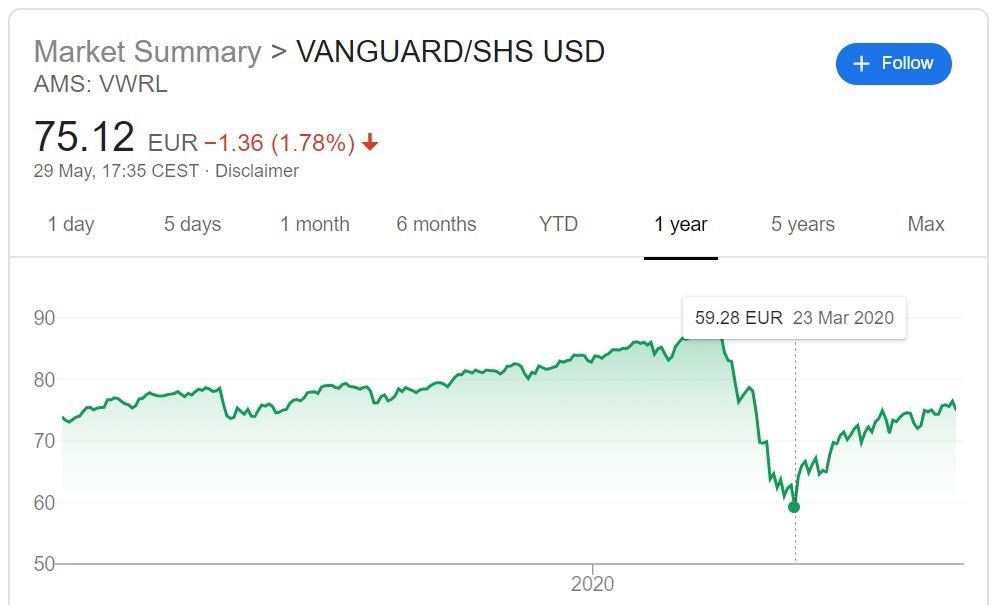
We have funds both in SIPPs (pensions) and ISAs (tax wrapper, non-pension accounts). We left the SIPPs alone, they are invested in Vanguard Lifestrategy 80 (roughly 80% index tracker funds, 20% bonds). We invested a further £7500 in the ISAs during the crash (specifically VWRL, Vanguard’s All World index tracker) and then did nothing. We didn’t sell anything, nor did we place any more of our emergency fund into shares. We *could* have made quite a good profit by continuing to buy shares as the market fell, but we didn’t know that at the time, no-one did. Also as we don’t know what the future will bring (unprecedented is a word rightly being used a lot at the moment), and we didn’t want to erode our cash and premium bond reserves.
What’s Happened with Rent?
One of our tenants is retired, and is funding rent from a pension. One has kept their salary and it looks secure, but we’re not sure about the other. The shop is rented to a mobile phone repair company who has several other shops, all of which were forced to close. At the start of the pandemic we contacted the management agents who look after our properties and told them if anyone was struggling with the rent we were ready to talk and work out a way forwards. We don’t want to see anyone on the streets, nor do we want to lose good tenants – most of them have been with us for several years.
The first month’s rent came in short and we did have a wobble, but it turned out in the confusion of locking down and working from home a payment had been missed by our agent, not the tenant, and was quickly rectified. Since then, all rent payments have come in on time. Whether this will continue remains to be seen, but we’re ready to work out a way forwards if we have to.
What Happened to Book Sales?
Book sales dropped off a lot in March (which was hardly surprising), but started up again in April and are almost back to normal by the end of May. Over the years we’ve been motorhome touring we’ve met a number of people who were pushed into adventure by a shock of some sort, typically a health-related one. Maybe the reminder of our mortality and lack of control has urged some people to think about taking action and grabbing at that dream to tour in a motorhome? Or perhaps the increased attraction of UK camping holidays this year is driving interest? Or maybe the fact Europe is opening up faster than many of us expected? We don’t know, but interest in motorhome life is certainly rising.
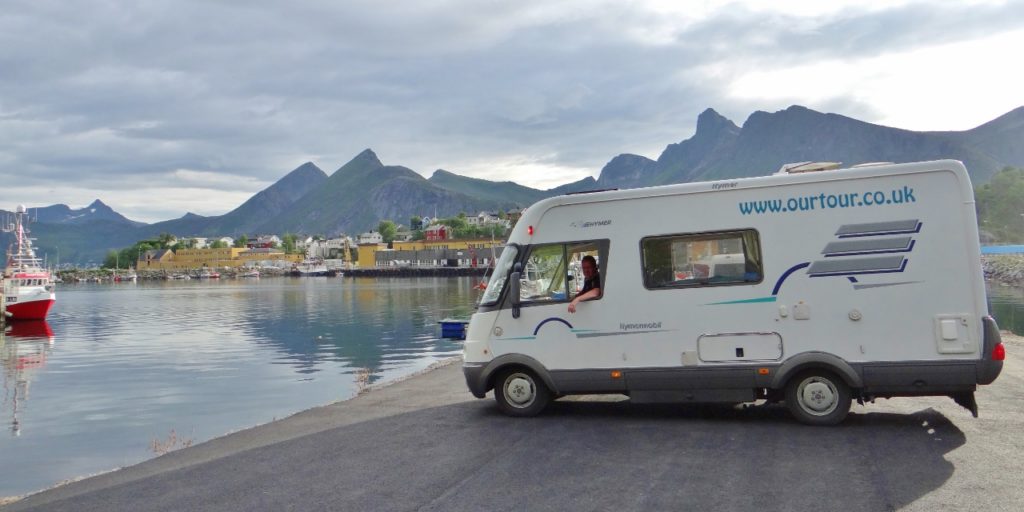
As well as Kindle eBooks and paperback formats, we also published our books on Kindle Unlimited (KU). Anyone with a KU subscription (two months free subscription here) can read the eBook versions for no additional cost. We’re seeing quite a few page reads, for which Amazon pays us a small amount (every little helps as a well-known retailer says!).
In Summary
Our anxieties over money were high for the first week or so of the pandemic, dropping off as government support packages were announced (we don’t benefit directly from any of these, but indirectly they may help us by helping our tenants) and easing more when the first rent payments came in. We pulled up our ‘balance sheet’ spreadsheet which lists everything we owe and own, just to confirm where we were, and assess whether we needed to think up new strategies (we didn’t), and we continue to check that balance sheet every month as we always have.
The two biggest lessons I’ve learned so far from COVID-19, from a purely financial perspective:
- An emergency fund is absolutely, 100%, massively critical for peace of mind at a time like this (it’s also a great thing to have at any time).
- We appear to have the balls to cope with stock market crashes without panicking.
The second one is important to us, as we’ll probably shift more and more towards using self-managed stock market funds and bond funds as the years go by. Most financial independence bloggers use the stock market far more than we do to fund their retirements (some examples: jlcollinsnh, Mr Money Mustache, Early Retirement Extreme), but we’re having to gradually build confidence in ourselves and our own psychology when it comes to reacting to market booms and busts.
Despite the horrors, the pandemic has gifted us an opportunity to stress-test our early retirement plan, and so far at least, it’s holding together.
Cheers, Jay

At least you’re not spending money on razor blades! :-)
Haha! The dog clippers came out at the start of lock down and the beard went, but it has a habit of just coming back again?! I’m enjoying vicarious travel in the US through your blog guys. Cheers, Jay
Good to hear you are ok, finance wise and more importantly health wise!
All good here too, but getting very itchy feet….and we”re still stuck even more than you in the UK…
Hi Jason, with the likes of Virgin, Aldermore Bank and Marcus easy access accounts all drastically lowering interest rates I’d be interested to know, from a real person, how your investment in premium bonds has fared? It strikes me that a gamble for a relatively short period would probably not hurt! Surely it can’t be any worse than 0.80% interest rate, with average luck of course!
Hi Alan
Ju keeps a track of the returns, but whatever we get won’t be representative, as it’s just down to luck.
Martin Lewis has a good piece on them (here: https://www.moneysavingexpert.com/savings/premium-bonds/). As he points out, the bonds have an average 1.4% return, but that’s skewed by the ‘few big winners’ and his calculator (here: https://www.moneysavingexpert.com/savings/premium-bonds-calculator/) shows that a £50k bond owner will win an average of £500 a year, aka 1%. In other words, not much more than 0.8%, and it could be 0% (or turn in a big win!).
There really isn’t much to be made in cash or bonds at the moment as far as I know anyway.
Cheers, Jay
Hi, Interesting article. I also manage my own investments and have stuck with the hold on and don’t panic strategy. One website I found useful was monevator.com. Like yourselves it very much influenced me towards passive funds. Although I haven’t gone 100% passive, and still have quite a few active funds.
Thanks Richard – I enjoy reading the monevator guys – clearly they know their onions! Cheers, Jay