
Yes, a Stock Market Crash is Coming!
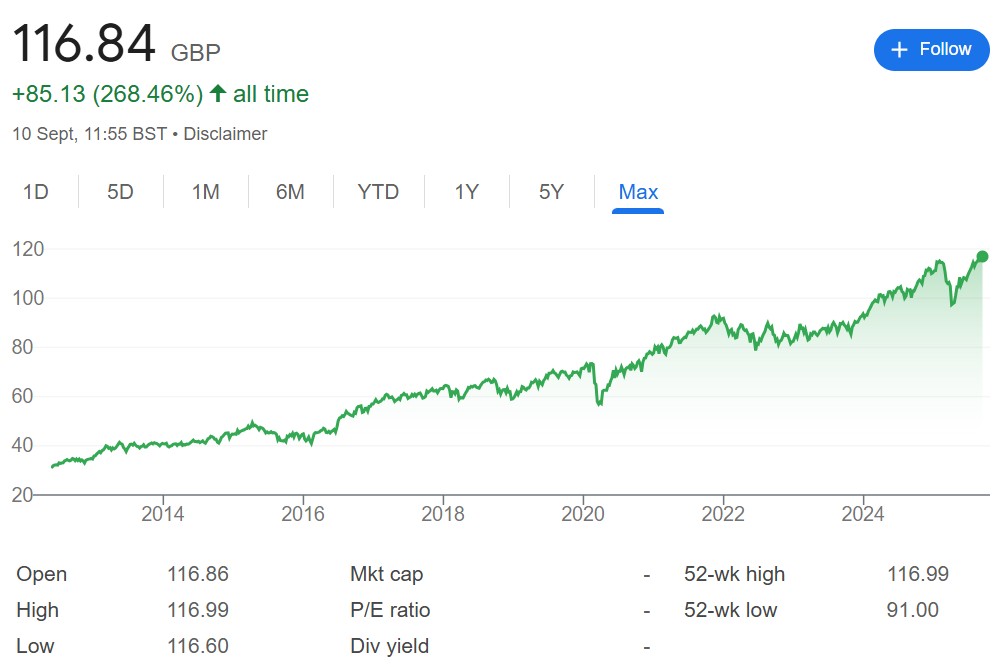
As usual, I cracked open my portfolio spreadsheet this morning as I supped my coffee (yes, I am that sad). My eyes grew a little wide: worldwide shares are at an all-time high folks! The sum total of wealth in the world’s publicly-traded companies has reached a height never seen in all of human history!

Great news! Surely everyone’s shouting about this enormous achievement of humanity!?
I opened another tab to check the BBC news. Lots about conflicts in Ukraine and Gaza, articles about Epstein, an influencer wrestling a crocodile and an article about Kent and Greenwich universities merging. Nothing about reaching this pinnacle of global wealth. Zilch, silence, tumbleweeds…

I knew this of course. I’d have been very surprised if there was anything about the stock market today.
Why Crashes are Newsworthy, But Highs Are Not
I’m not having a pop at editors. If I ran the BBC news, I wouldn’t report on this either.
Why not? Because it’s happening all the time. It’s not news, it’s far too dull. To get to an all-time high today, we’ve passed an endless series of all-time highs on the way here. If I opened the BBC news and every few weeks or months there was the same article about stock market records being broken, with slightly different numbers, I wouldn’t read it.
No-one else would. End result: BBC EDITOR SACKED. Good riddance, what a dullard!
A crash on the other hand? Woo Hoo! They happen far less often and are so much more exciting and juicy. You can bet when the next one happens it’ll be big news. “TRILLIONS LOST, GODZILLA IS UPON US” type headlines, very catchy, lots of clicks, happy days, big bonus time. (I’ve titled this blog post in a similar negative vein to be fair, to attract eyeballs).
This is where the news can really let us down by skewing our feelings about the stock market. Unless we spend time understanding how it all works, buying shares feels like a gamble. Almost a guaranteed way to lose money. The truth, as we’ve just seen by the markets reaching yet another new high, is the exact opposite.
Why We Don’t Care About Market Crashes
Back to the market crash topic: In the future we (Ju and I) expect shares to replace all our income streams except for a relatively small defined-benefits pension I’ll get and, eventually, state pensions. We’ll get cash from these shares by taking dividends, and by selling some shares each year. We won’t try to time when we sell them to coincide with market highs. When we need the money, we’ll sell a few and leave the rest invested.
But even though shares will pay our bills, we still don’t care about market crashes.
Here’s why not:
Crashes are inevitable. They happen every few years. Over a 30 year retirement we’ll live through several, so we’ve planned for them.
That doesn’t mean we’ll somehow magically guess when one’s coming and sell into cash before it hits. It means we’ll get surprised by it, the same as everyone else on the planet, and then do nothing. We might tighten our belts a bit, but otherwise we’ll carry on as before.
Why do Nothing?
The temptation when a crash hits is to sell. Your hard-earned asset is suddenly and very visibly losing value, and a lot of it. We saw this in COVID, when the markets took a nose dive and, as I’m sure you’ll remember, the newspapers were screaming like it was the end of the world. It kinda felt like it was.
Unlike a rental house, it’s very, very easy to sell shares. A few taps on your phone screen and it’s done. This isn’t usually a good thing. Yes, it’s very convenient when you need to get some cash. But it’s also FAR TOO EASY to panic sell during a crash. Panic selling almost guarantees your assets will under perform long term. Why? because it’s very hard to know when to buy back in.
It’s easy in hindsight, but in real-time, nigh-on impossible.
That said, you might get lucky and achieve it once, but as I’ve said, you’ll live through many crashes. Your chances of getting it right multiple times are small. End result: panic-sellers tend to sell low and buy high, which is really very bad for your long term financial health.
There was absolutely no chance we’d have guessed the markets would rebound so quickly and aggressively during COVID. But we sat tight and didn’t sell. In fact we bought more shares as the valuations plummeted. They were suddenly much cheaper than they had been a week before, on sale if you like, and we like a bargain. (This is market timing though, which is generally not a good idea either.)
But What About a Crash Which Lasts for Years?
Historically the markets have tanked and stayed tanked for several long, cold and dreary years. The Great Depression in the late 1920s hit so badly the markets didn’t recover for 25 years. The Dot Com bust of the early 2000s took seven years to get back to the pre-crash valuation. The 2008 financial crisis weighed in at about four years.
The way we plan for these very long crashes is to have enough shares to last through the lean times. There’s been plenty of research into how those long downturns affected people’s retirement funds (look up the “Safe Withdrawal Rate” or “SWR”).
The outcome is this: if you only take between 3% and 4% of the total value of your shares the first year you retire, then only increase that amount by inflation each year, your portfolio should (only “should”, no guarantees) ride out any long depressions.
In practice this means if your shares are your only source of income, you’ll need roughly 25 to 33 times your annual expenditure invested to fund your retirement (different sources suggest different SWRs).
So if you spend £30,000 the first year of your retirement, you’ll need between £750,000 and £990,000 invested at that point. The sums take into account inflation, but not taxes and fees, so you may need more. But if you’re likely to get the state pension or any other form of income, you’ll need less.
It gets complicated, especially with big one-off costs, inheritances, different share/bond ratios etc. Either fire up a spreadsheet or talk to a financial planner who has the tools and experience to model all this stuff.
We Are the Risk, Not the Shares
Like many investments, the biggest risk with stock market investing isn’t the stock market, it’s with us, the investors.
If we don’t understand what we’re buying or why, the chances are we’ll act in the wrong way at the wrong times, and mess things up. In the case of stock markets, that typically means trying to pick individual stocks, hunting for a star fund manager, trying to guess when a share or fund is cheap and sell it when it’s reached a high, panic selling during a crash, not taking fees or tax-planning into account and so on.
How to arm yourself against this? Read widely, study, build your understanding both about the investment, and about how our human behavior influences us to make poor choices sometimes. I recall someone saying the level of effort is roughly equivalent to learning how to drive a car, which feels about right to me.
Cheers, Jay


Well done, you got linked on Monevators weekly links.
Financial gurus now 😂
Really? Praise indeed. 👍